Being
Lots of things about truly great learning are counter intuitive.
I find it similar to love. For example needing to be loved, can be a barrier to being loved. In learning wanting to ‘become’ something, can stop you being that fully. And similarly wanting learners to ‘become’ something, can stop them being that.
That can cause a strong reaction in some people, especially teachers who have spent their life thinking about ‘potential’ and pathways to other places. I have been confronted by a senior leader who became physically rigid and looked like he wanted to fight me when I described Reggio Emilia’s belief that children are the ‘citizens of today’ and early childhood is not about ‘preparing for school’. He exploded into ‘what do you mean it is not preparing for school? That’s ridiculous, what else are they doing?’. I know in many places, that belief is so strong that and any other view seems so alien, that I might as well be saying time runs backwards, and the sky is green. You get quizzical looks, and can tell they thinking there is a mad person in the conversation and it’s not them.
But nonetheless, I think it’s true. So I wanted to put forward a few thoughts. They are not rage-bait, and I am comfortable if you disagree. If you do disagree, they might be an interesting complement to your own thinking, or make you appreciate the strength of your own beliefs. That’s positive too. Breathe, relax and open yourself to someone else’s thinking. Be in the moment ;)
Some thoughts are
Working with Danny Coster, a core member of the Industrial Design team at Apple, and a codesigner of all the iconic products of that team, he repeatedly said as we worked on an educational design, ‘if you know what you want, that’s all you are going to get.’ He repeated invited being present, meditating and noticing the now. He repeatedly talked about noticing the space between the fireworks, not just the fireworks. Don’t try to get somewhere else. As a result? We created a really great educational design for Green School - simple, joyful and elegant. It’s accredited by all NZ universities despite being totally exam-free, and based on regenerative practice and learner autonomy. But I also have incredibly happy memories of being there and doing it.
Some of the greatest mathematicians, do not focus on ‘becoming a good mathematician’. My father used to recount how a Nobel prize winning mathematician used to say he spent four hours a day doing maths, and then the rest of the day playing, walking and not concentrating on maths. This being in the moment meant he became a prize winning mathematician. I noticed the same thing in the best student of maths I have ever come across. For context his best friend got into Princeton and Cambridge for maths, and lamented he would never be as good or intuitive at maths as this person. The student valued the balance of playing football and doing maths - as a way to create perfectly balanced days in which he could just ‘be’. He never aimed to become ‘good at maths’. He just enjoying being a mathematician each day.
Most distressing experiences of school and learning, come as a result of things like stress and anxiety caused by a worry about not ‘being’ what you are supposed to become. Exams and high stakes assessment are designed to make you think of what you are in deficit for and then try to make up the gap by becoming the thing you are not, and if you don’t manage it, you ‘fail’. If we know that ‘conditional regard’ is psychologically abusive as a parenting style, then you could argue this is institutionalised psychological abuse. It certainly has that effect on many children traumatised by school experiences. Many adults have anxiety dreams about failing exams; I don’t know any who have anxiety dreams about all the other ways they learned in informal settings as a child. We tend to wilfully ignore this effect of education.
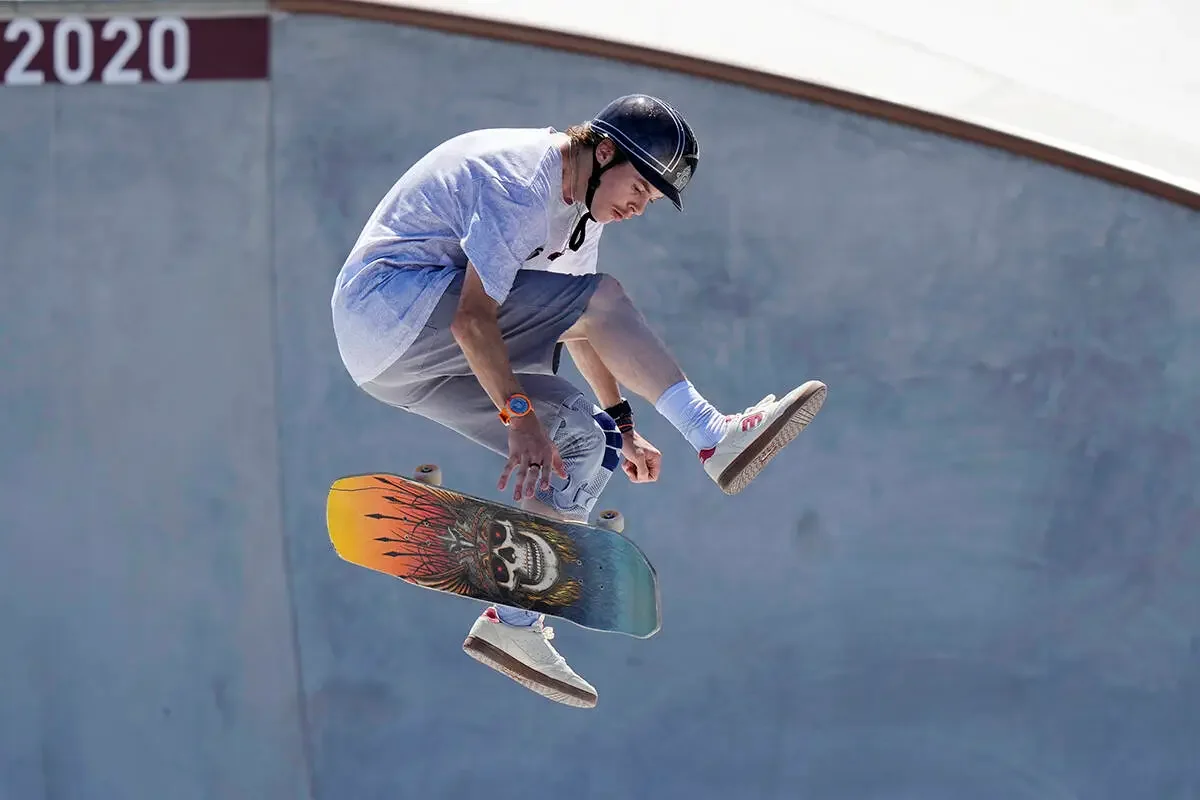
The very best skate boarder in the world in my view and the one creating new tricks, contexts and ways of skateboarding, talks about how challenging he finds it that young skateboarders talk about what they are doing as ‘learning to skate’. His point is you are skating. You are not trying to get to somewhere else, because, by the way, you will never get there. You ARE skating. Enjoy it. You might just get better faster if you do. But you are never going to arrive at the ‘learned to skate’ stage, as it doesn’t exist. Now is what you have, and what you’ll always have.
The simple act of being mindful has profound benefits. Why is that? What does that mean for classrooms that constantly and enternal talk about becoming something else?
A famous headmaster, tired of being constantly asked ‘but what are you preparing them for?’ by a parent, responded ‘For death madam, for death’. His dour response, is both truth and rebuttal. If we see education as a preparation for university, as a preparation for jobs, as a preparation for success, as a preparation for a comfortable income, as a preparation for a good retirement, as a preparation for….death. Do we really want to live like that?
The irony of the anger of those who feel it would be irresponsible to focus on the quality of current experiences as an end in themselves, is that they miss you are going to get what they want anyway. You’ll get engagement and learning, and magic or practical outcomes might happen. But the same is not true the other way round.
To return to the beginning, this is just as when you don’t ‘need to be loved’ you might find that you are loved, and enjoy it. So too, if you stop trying to make children become something they are not, by focusing on the quality of experiences they have in being themselves, you might find they ‘become’ in a quite startling way. At the moment that is not what we necessarily do in schools, and if you can’t tell it’s not working, you are not looking very closely.
If you are interested in exploring these ideas, Scotland’s Being Me: Realising the Ambition is a wonderful guidance document worth looking at as a practical guide to doing this in early childhood. Reggio Emilia’s publications, and anything by Carla Rinaldi is worth a read.
If you want to see what happens when you just embracing ‘skating’ rather than learning to skate, see this video of Andy Anderson, and this interview.
If you want to explore the critique of the humanist and western tradition of seeing perfection a few steps away beyond reach, a good starting point is Nietzsche, but he is a very challenging, if fun, read. Spinoza explores similar ideas in his own way. A recent masterwork is Donna Haraway’s Staying with the Trouble, which I strongly recommend. I also really enjoyed her Companion Species Manifesto about our relationship with dogs, who I think have got living in the moment down to a T. Diogenes was on to something.